What embedded systems development covers
An embedded system is the computer inside a product: a microcontroller or processor, the sensors and actuators around it, and the software that makes it do one job reliably for years. SD Corpe designs these systems for industrial machines, building controls, health monitoring devices, smart locks, farm sensors and connected home products.
Our hardware, firmware and software engineers work in one team. That matters most for the decisions that cause trouble later if they are made in isolation: which microcontroller to use, how much memory to keep free for future updates, how the device is powered, and how each unit will be tested on the production line.
What we deliver
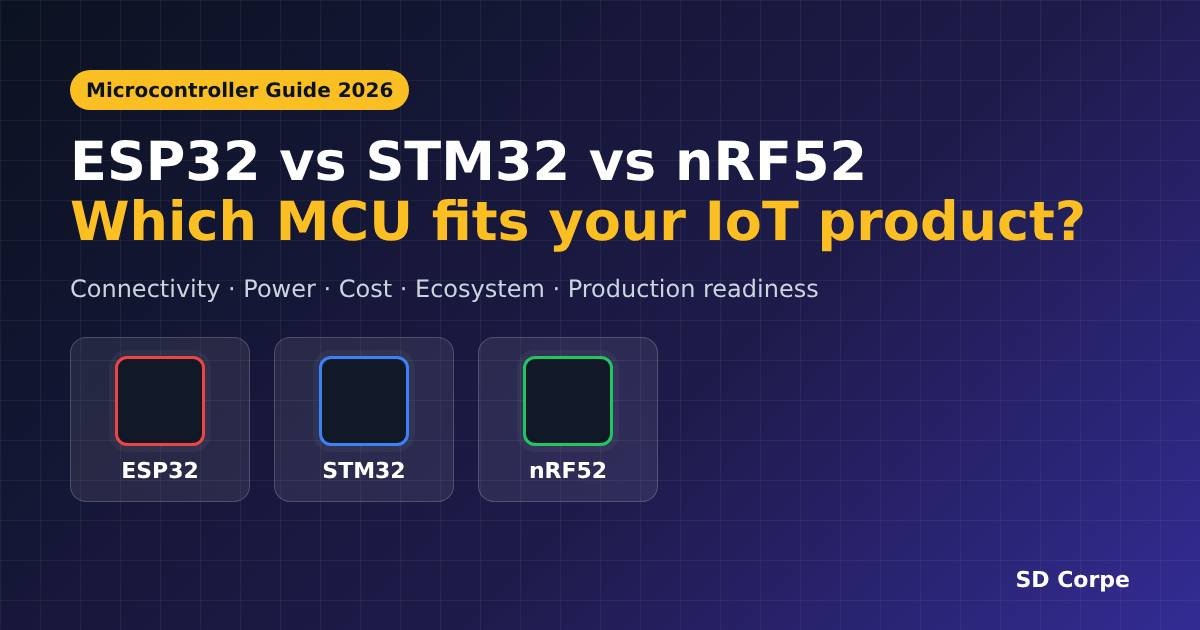
- System architecture and microcontroller selection. We compare candidate chips, such as STM32, ESP32, nRF52 and other ARM Cortex-M parts, against your needs for connectivity, power, peripherals, cost and long-term availability, and we write down why we chose one.
- Real-time embedded software. Bare-metal or FreeRTOS-based software in C and C++, structured so that timing-critical work such as motor control, sampling or safety cut-offs always meets its deadline.
- Sensor integration and data acquisition. Drivers, calibration and filtering for temperature, current, pressure, motion, gas and other sensors. Readings are checked for faults instead of being trusted blindly.
- Power management. Sleep modes, wake-up sources and duty cycling for battery-powered devices, measured on real hardware rather than estimated from datasheets.
- Hardware abstraction layers. A clean layer between the application code and the chip, so a component shortage or a move to another microcontroller doesn't mean rewriting the product.
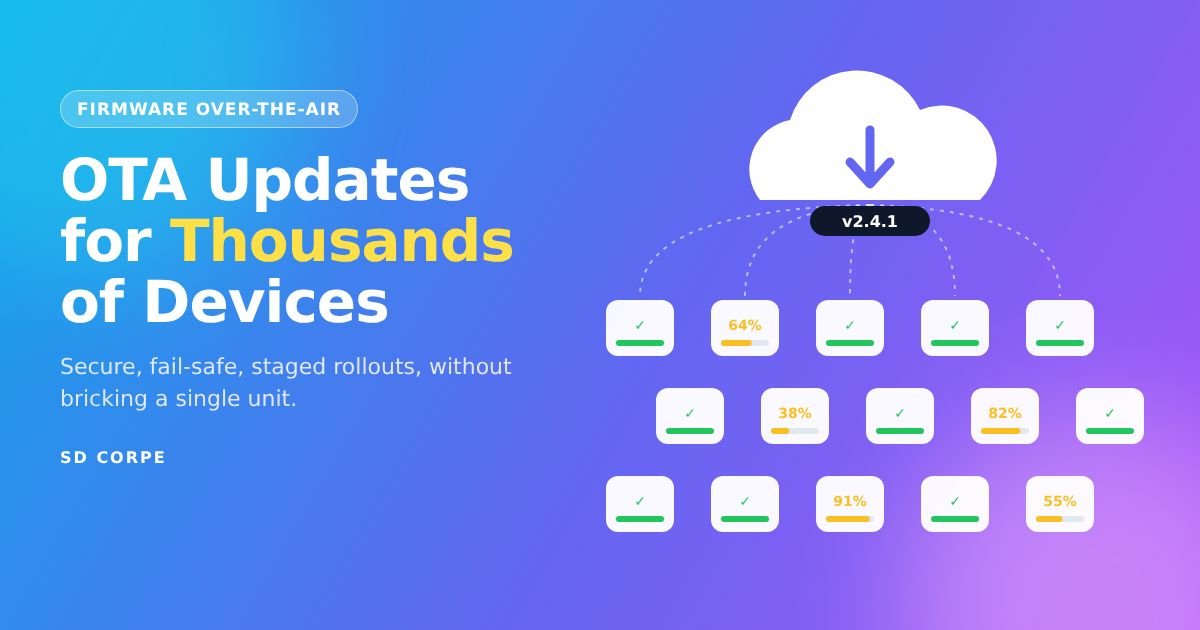
- Bootloaders and OTA updates. Secure bootloaders and fail-safe over-the-air updates, so devices already installed can be fixed and improved without a site visit. Our guide to secure OTA firmware updates explains the approach.
How an embedded project runs
- Requirements and feasibility. We agree what the device must do, where it will be used, its power and cost targets, and any certification it needs. Risky assumptions are tested on development boards before custom hardware is designed.
- Architecture. Microcontroller, interfaces, memory budget, software structure and update strategy, documented so your team can review and question them.
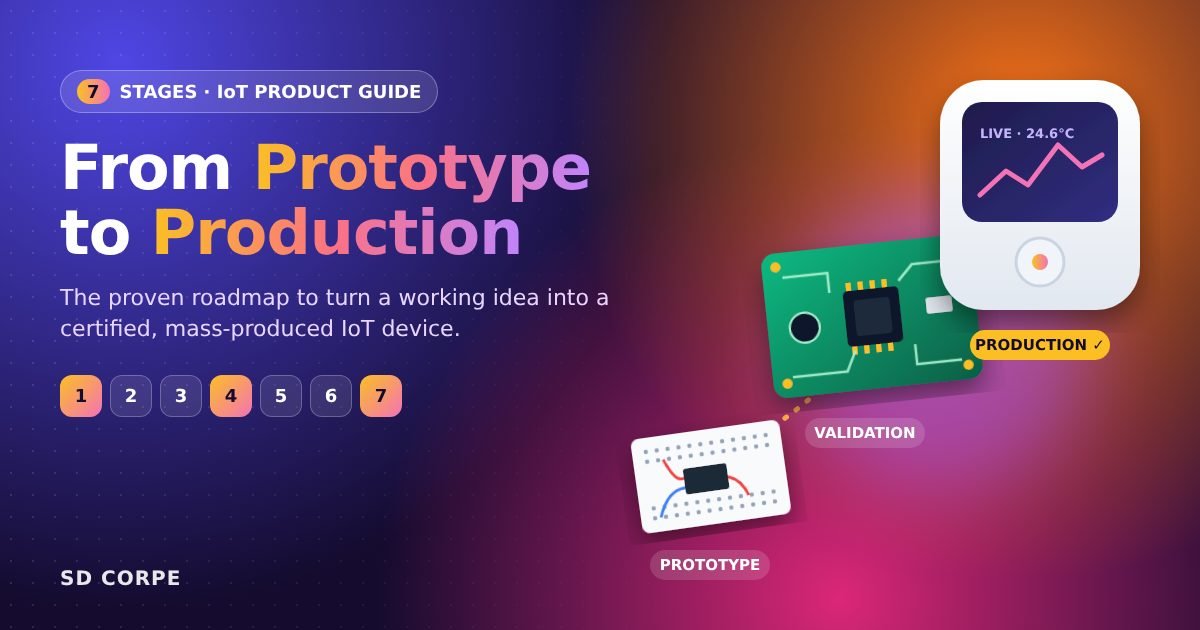
- Prototype hardware and firmware. Schematic, PCB and first firmware are developed side by side, so the first boards can be brought up and tested soon after they arrive.
- Testing and validation. Unit tests for the logic, bench tests with oscilloscopes and logic analyzers for timing and signals, power measurements, and long-running tests that catch faults which only appear after hours or days.
- Production support. Programming and test procedures for the factory, versioned release builds, and support after launch.
Where our embedded systems are used
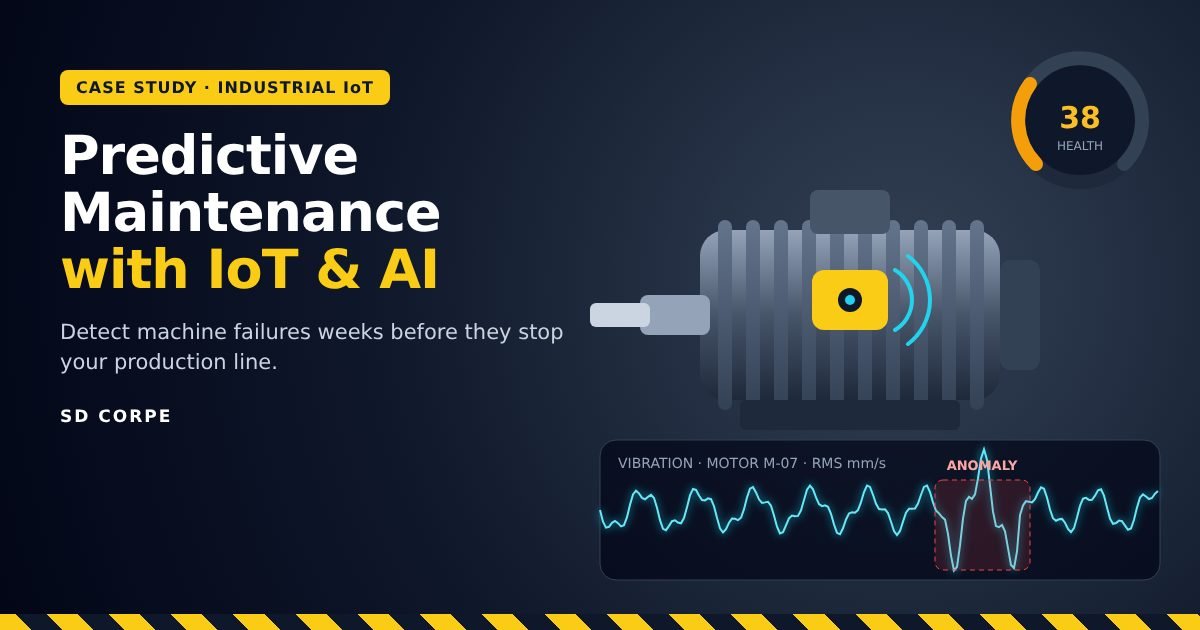
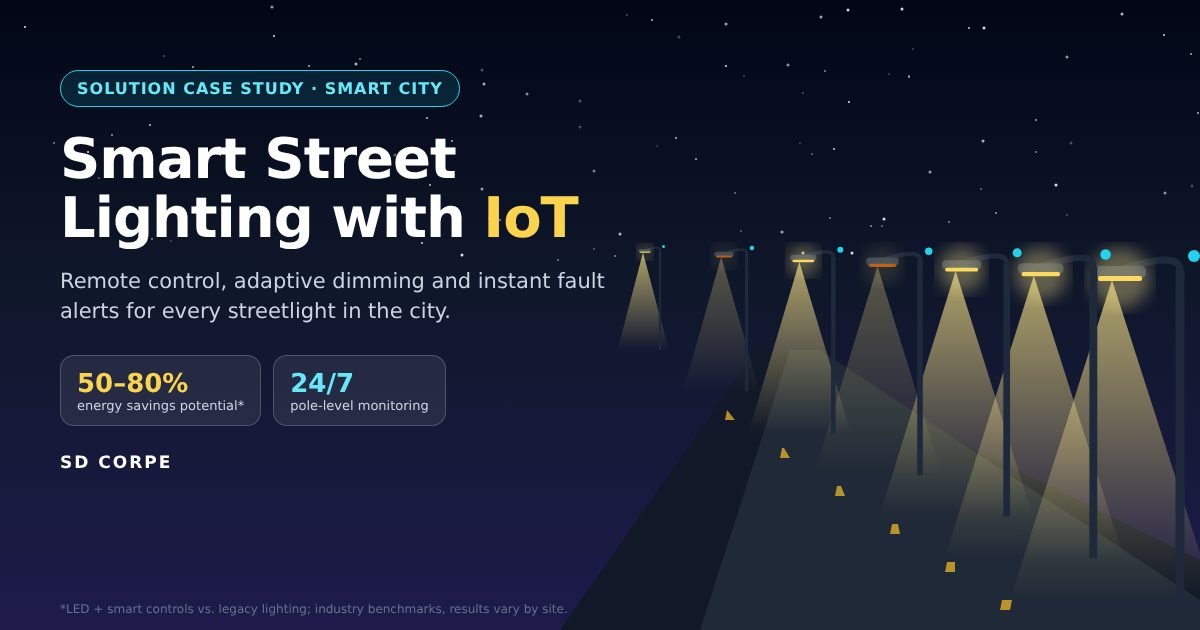
We build embedded systems for healthcare, industrial automation, building automation, smart city infrastructure, smart farming, smart home products and smart locks. Each of these has different priorities. An industrial controller has to tolerate electrical noise and run for years without a restart. A smart lock has to last a long time on batteries and stay secure. A farm sensor has to survive heat, dust and a weak network signal.
If you are still choosing a chip, our comparison of ESP32, STM32 and nRF52 covers the trade-offs we look at first.
Why work with SD Corpe
Since 2022 we have delivered 150+ projects for 50+ clients in India and abroad. You work directly with the engineers who design your product, and the same team can take it further into PCB design, IoT connectivity, web dashboards and mobile apps when you need them. All intellectual property, including source code and design files, is transferred to you when the project is complete.