What IoT development covers
An IoT product is more than a device with a radio. It is the hardware and firmware in the field, the network that carries its data, the cloud service that receives and stores it, and the dashboard or app that turns the data into decisions. Most IoT projects that struggle do so at the joins between these parts, when each is built by a different supplier.
SD Corpe builds the whole chain with one team. We design the device, choose the connectivity, write the firmware, connect it to the cloud and build the dashboard, so data formats, security and update mechanisms are planned once and work together.
What we deliver
- IoT device firmware and connectivity. Firmware that connects reliably, reconnects on its own after network loss, buffers data while offline and reports its own health.
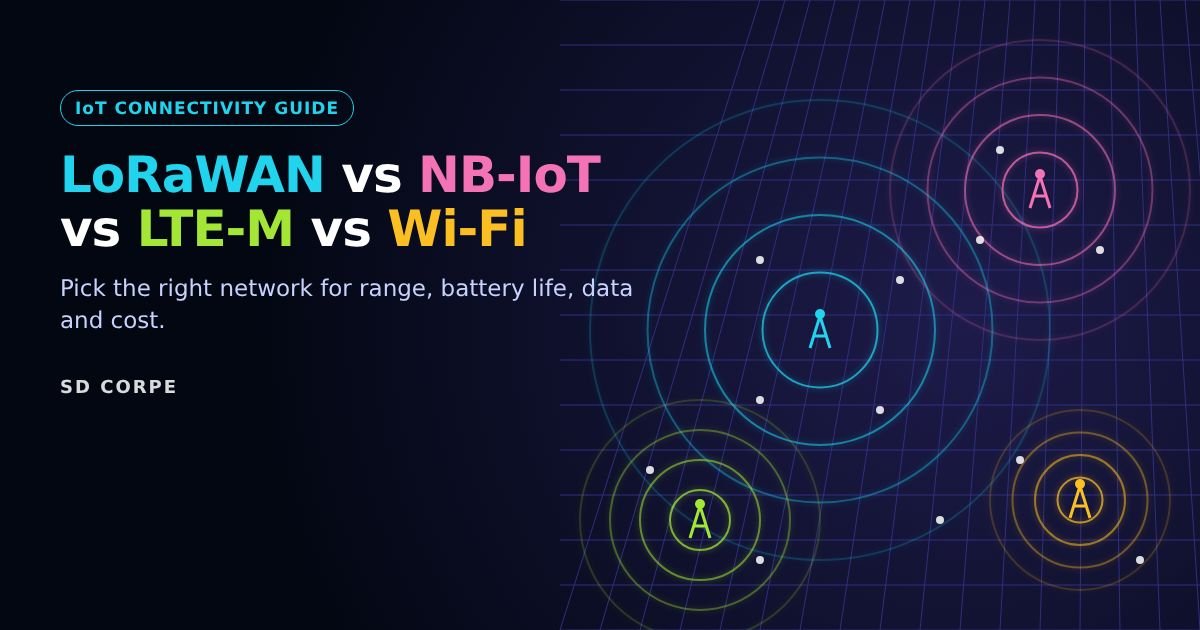
- Connectivity selection. Wi-Fi, Bluetooth Low Energy, LoRaWAN, Zigbee or cellular, chosen by range, power budget, data volume and running cost. Our comparison of LoRaWAN, NB-IoT, LTE-M and Wi-Fi explains how we decide.
- Cloud platform integration. Connecting devices to AWS IoT, Azure IoT or Google Cloud, including device provisioning, message routing and data storage.
- MQTT, CoAP and HTTP. The messaging protocol and data format that suit your devices and network, designed so new device types and fields can be added later.
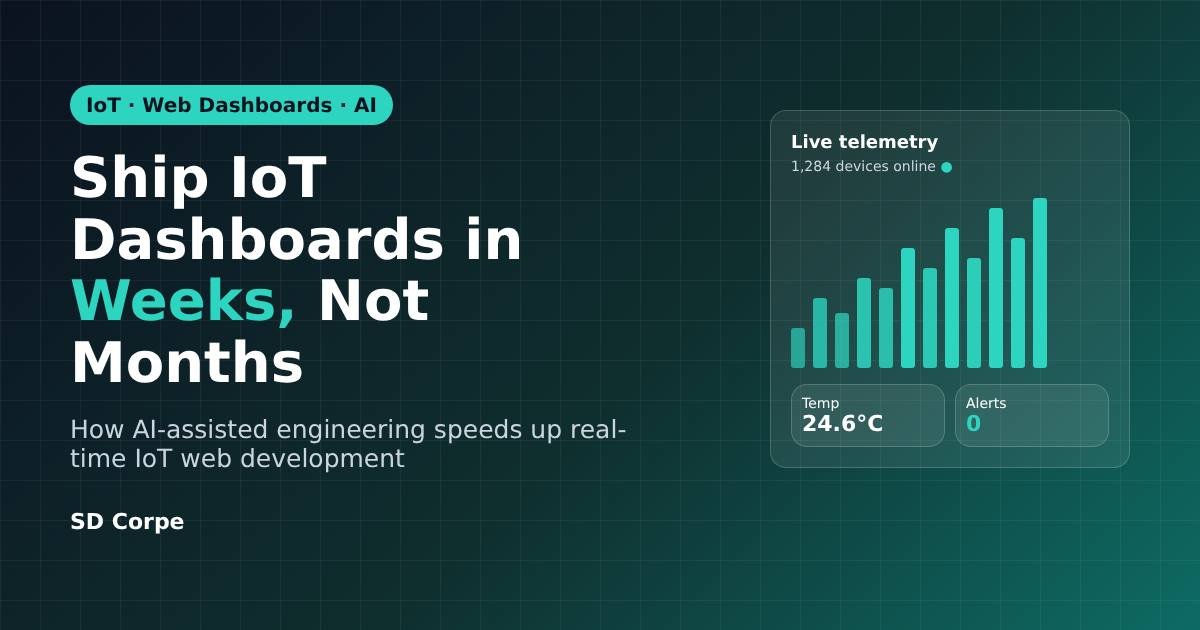
- Monitoring dashboards. Real-time dashboards, alerts and reports for operators and customers. See how we approach IoT dashboard development.
- Edge processing. Filtering and analyzing data on the device or a gateway, so only useful information is sent and the system keeps working during network outages.
- Device security. Unique device credentials, encrypted communication, signed firmware updates and a plan for revoking compromised devices.
How an IoT project runs
- Use case and data. We agree what needs to be measured or controlled, how often, who acts on the data and what happens when a device goes offline.
- Proof of concept. A small number of devices on development hardware, sending real data to a basic dashboard, to prove the connectivity and the value of the data before custom hardware is built.
- Device and cloud development. Custom hardware, production firmware, cloud services and dashboards are developed together against an agreed message format.
- Pilot deployment. A field trial in real conditions, where we watch coverage, battery life and data quality and fix what the lab didn't show.
- Rollout and operation. Production, provisioning at scale, over-the-air updates and ongoing support.
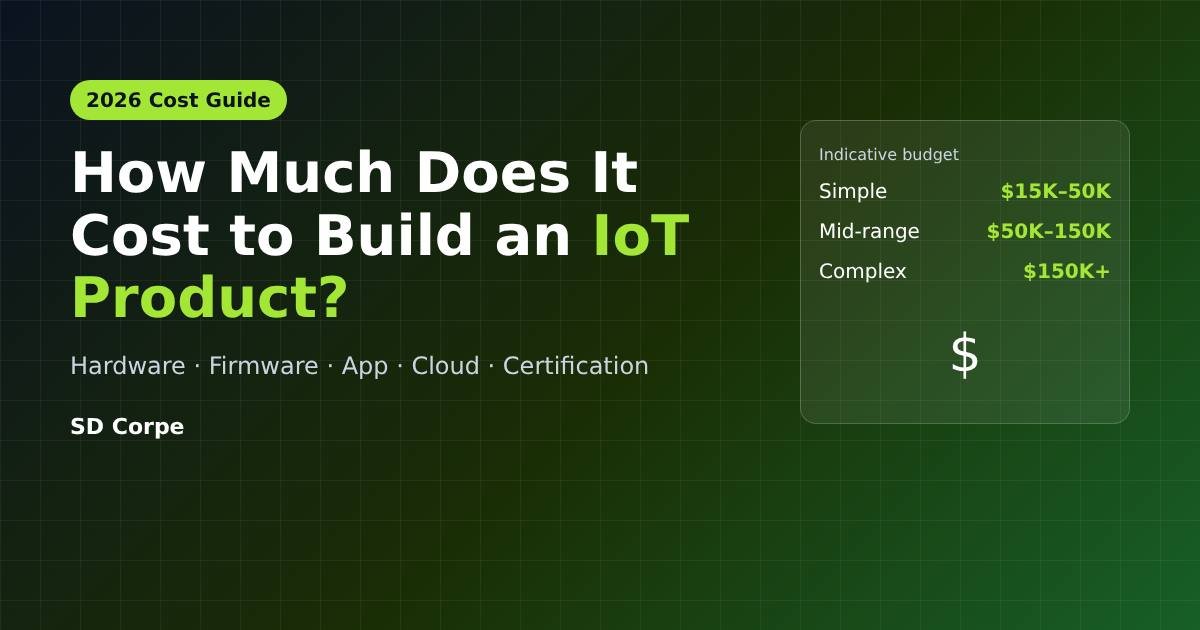
Our article on the stages of IoT product development covers each step in more detail, and our guide to IoT product development cost explains what drives the budget.
Where our IoT systems are used
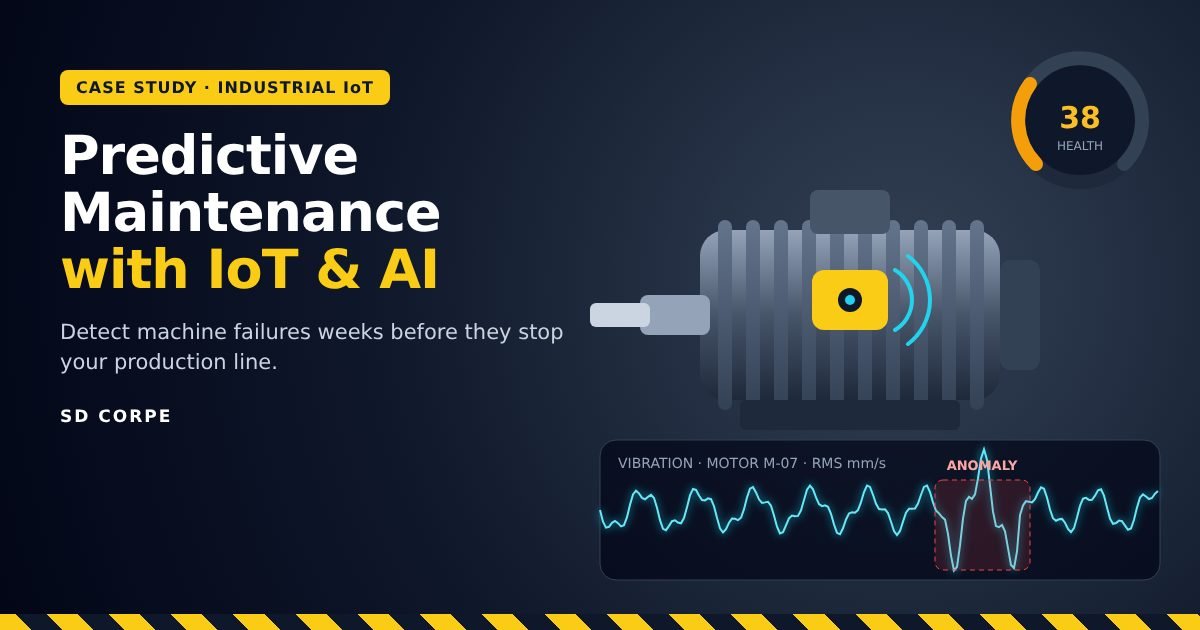
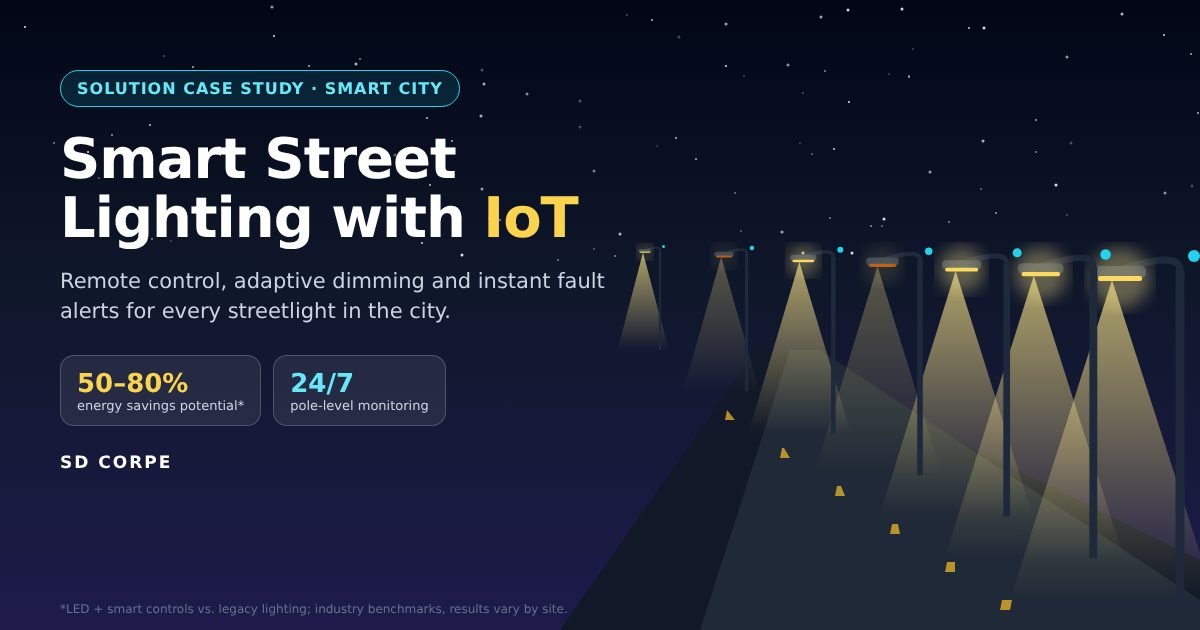
We build IoT systems for industrial automation, such as machine monitoring and predictive maintenance; smart city projects, such as street lighting and remote infrastructure monitoring; building automation; smart farming with field sensors; healthcare monitoring; smart home products; and smart locks.
Why work with SD Corpe
One team owns the whole system, so there is one place to call when data stops arriving. Since 2022 we have delivered 150+ projects for 50+ clients in India and abroad. We also offer support and maintenance after launch, and all intellectual property is transferred to you when the project is complete.